
woman who is contemplating recurrence of breast cancer
There's a sentence I still catch myself saying, fifteen years out: I still have moments. Not often. Not the way I did in year one. But they're there — a symptom that lingers a little too long, an anniversary date on the calendar, a scan on the books. And every time, some small part of me half-expects to have "graduated" past this by now.
If you've felt that same quiet surprise — shouldn't this be over already? — I want to tell you something clearly, backed by real research, not just my own experience: fear of recurrence doesn't follow the neat timeline we're taught to expect. For a meaningful number of survivors, it doesn't fully disappear. And that doesn't mean you're doing survivorship wrong.
The Myth We're Sold: Fear Fades With Time
There's an assumption baked into how most people talk about survivorship — that fear of recurrence is a phase, something you move through and eventually leave behind, like the acute grief right after diagnosis. Intuitively, you'd expect fear to reduce over time as you psychologically adjust and your actual medical risk decreases.
Here's what the research actually shows: a proportion of long-term survivors continue to experience real fear of recurrence many years after their original diagnosis. In one large study of German breast cancer survivors, 17% reported moderate to high levels of fear of recurrence when surveyed an average of eight years after diagnosis. Eight years. Not eight months.
This matters because it means the fear you might still be feeling years out isn't a sign that something is wrong with your healing. It's a documented, studied pattern.
How Common Is This, Really?
The numbers here are striking, and worth sitting with. Fear of cancer recurrence is described in research as a common experience that's believed to persist long after treatment ends, and estimates of how many survivors experience it range widely — from 39% up to 97% — depending on the cancer type and how it's measured. Other research places moderate to high levels of fear at 30% to 70% of survivors. Whichever number you land on, the pattern is the same: this is not a fringe experience. It's closer to the norm than the exception.
And this isn't specific to one type of cancer, either — researchers have found fear of recurrence in survivors of breast, colorectal, testicular, head and neck, lung, endometrial, thyroid cancer, lymphoma, melanoma, and more. It shows up across the board, which tells us something important: this fear is a human response to having survived a real threat, not a quirk of any one diagnosis.
It Doesn't Move in a Straight Line
Here's a detail I wish someone had told me early on, because it would have saved me a lot of self-judgment: fear of recurrence doesn't decline steadily like a fever breaking. One study following breast cancer survivors monthly for a full year found that 58% of women had a fluctuating course — some months higher, some months lower — while 22% remained consistently high and 21% remained consistently low throughout the year.
Read that again: the majority of survivors in that study didn't have a stable experience of this fear at all. It moved. Some months were harder than others, for reasons that weren't always obvious. If your fear feels unpredictable — worse around certain dates, easier during ordinary weeks, and you can't always explain why — that's not a sign you're managing it poorly. That's simply how this fear tends to behave for most people.
Why It Can Resurface Even Years Later
Research offers a helpful clue here: lingering or newly-emerging physical symptoms and functional changes — the ones that show up well after active treatment ends — have been shown to predict fear of recurrence measured years later. In other words, your body doesn't have to be actively "in treatment" for a new ache, a lingering side effect, or ongoing fatigue to reactivate that fear. One long-term study specifically found a relationship between persistent cancer-related fatigue and fear of recurrence measured years after diagnosis, sometimes as far out as nine years.
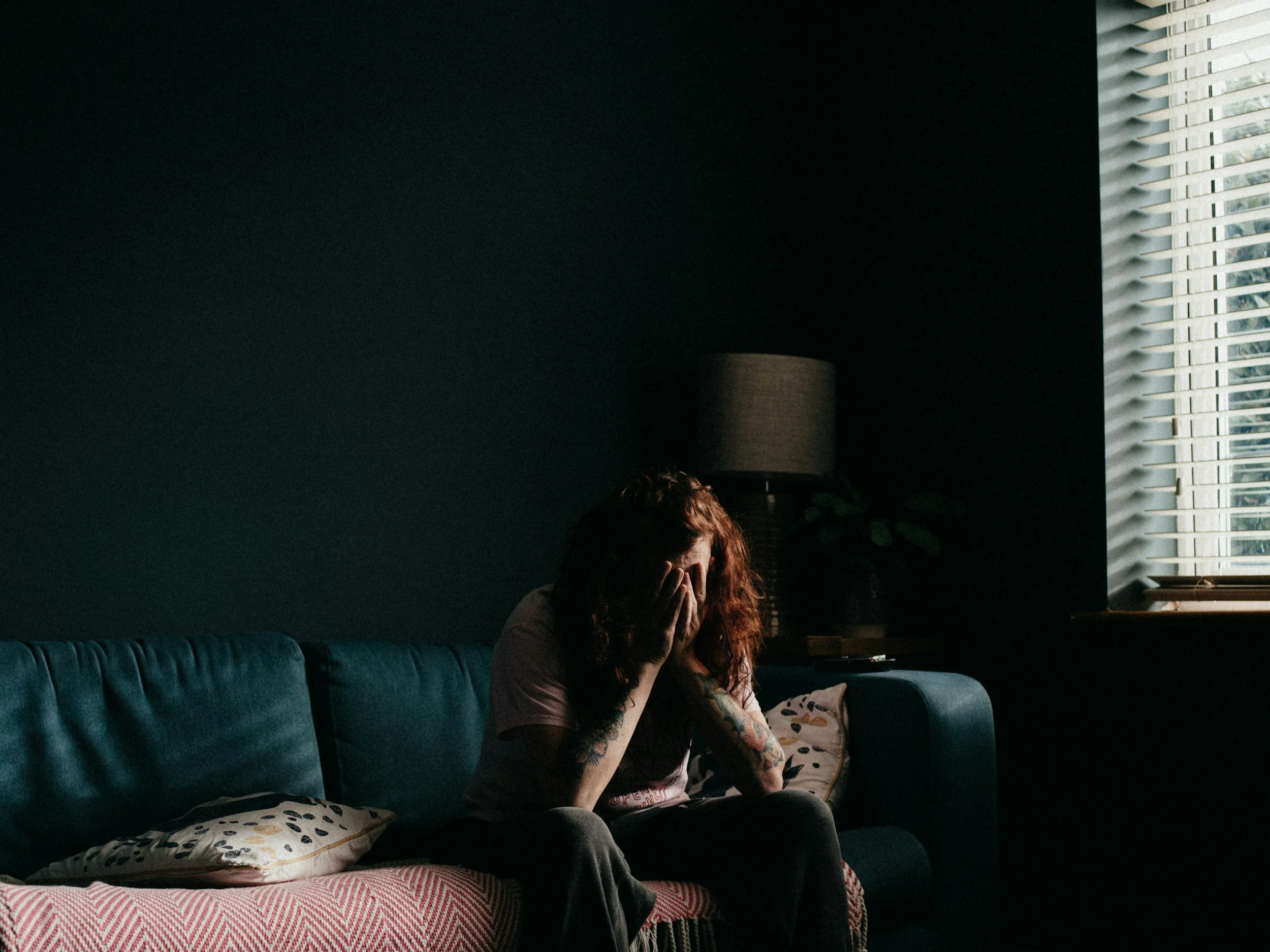
woman anxious
This also explains something many survivors describe but rarely hear validated: fear of recurrence and physical after-effects aren't separate experiences running side by side. They feed each other. A body that's still recovering, still fatigued, still occasionally surprising you, gives the fear something to hold onto.
What Actually Helps, Long-Term
The good news: because this fear has been studied so extensively, there's real, tested guidance for living alongside it — not just white-knuckling through it.

woman who is encouraged
Structured psychological approaches work. Programs like ConquerFear, tested in a randomized controlled trial, have shown measurable, lasting improvement in fear of recurrence — built around noticing unhelpful thought patterns without fighting them, practicing healthy (not excessive) body awareness, and building a life oriented around your actual values rather than around avoiding fear.
Naming the fluctuation itself helps. Simply knowing that this fear moves in waves, rather than expecting a steady decline, tends to reduce the extra layer of self-judgment survivors pile on top of the fear itself — the "why am I still like this" spiral that often hurts more than the original fear.
Addressing lingering physical symptoms matters more than people realize. Since ongoing fatigue and physical after-effects are linked to sustained fear of recurrence, taking those symptoms seriously — rather than dismissing them as "just part of being a survivor now" — can genuinely ease the emotional load too.
Connection with people who understand changes everything. Isolation and unmet informational needs have both been linked to higher fear of recurrence. Simply having somewhere to say "I still have moments" without needing to explain or justify it takes real weight off.
A Different Way to Measure Progress
If fear of recurrence doesn't reliably disappear, what does healing actually look like? I'd offer this: it's not measured by the fear reaching zero. It's measured by whether the fear is running your life, or riding along in it.
Fifteen years out, I still have moments. But they don't stop me from planning a future, showing up for the people I love, or building the life I actually want. That shift — from fear driving the car to fear just being a passenger — is the real destination. Not its disappearance.
"Shouldn't You Be Over This By Now?"

woman knowing that conquering fear is a process
If you've ever gotten a version of this question — maybe not said so bluntly, but implied in a raised eyebrow or a "but you're fine now, right?" — I want to give you some language for it, because it comes up more than almost anything else survivors describe.
The honest answer, backed by everything above, is simple: fear of recurrence isn't a phase with an expiration date. It's a well-documented, long-term experience that affects a meaningful proportion of survivors for years. You don't owe anyone an explanation for still having moments, but if you want one, something like this tends to land well: "This isn't something that just goes away on a schedule. I'm doing well, and I still have moments where it comes back. Both are true."
You're allowed to hold both truths at once — genuinely doing well, and still occasionally afraid. Neither one cancels the other out.
What This Means for How You Talk to Your Doctor
Becausefear of recurrence is so closely tied to physical symptoms and ongoing fatigue, it's worth bringing up directly at follow-up appointments, even years out. A few ways to open that conversation:
"I've noticed my fear of recurrence tends to spike when I'm more fatigued than usual — is there anything we should look at?"
"I know it's been years, but I still have real anxiety around this. Are there resources or referrals you'd recommend?"
"Is there a pattern to when survivors typically experience this, or am I unusual for still feeling it this far out?"
Given how much trust most survivors place in their care team, opening this conversation directly tends to be far more productive than assuming it's something to just manage silently on your own.
Frequently Asked Questions
Does fear of cancer recurrence ever fully go away? For some survivors, it fades significantly over time. For a meaningful proportion, it persists at some level for years, even decades, after treatment ends. Research shows roughly 17% of survivors still report moderate to high fear of recurrence when surveyed an average of eight years after diagnosis.
Is it normal for fear of recurrence to come and go unpredictably? Yes. Research following survivors monthly found that the majority experienced a fluctuating pattern rather than a steady decline, with fear levels rising and falling from month to month.
Why does my fear of recurrence get worse even years after treatment, with no clear trigger? Lingering or newly emerging physical symptoms, including fatigue, have been shown in research to predict fear of recurrence measured years later — meaning your body's ongoing recovery process can reactivate this fear even long after active treatment ends.
Does having fear of recurrence years later mean something is wrong with how I'm coping? No. This is one of the most extensively documented experiences in survivorship research, occurring across nearly every cancer type. Its persistence reflects the reality of what you survived, not a failure in your coping or healing process.
Where This Leaves You
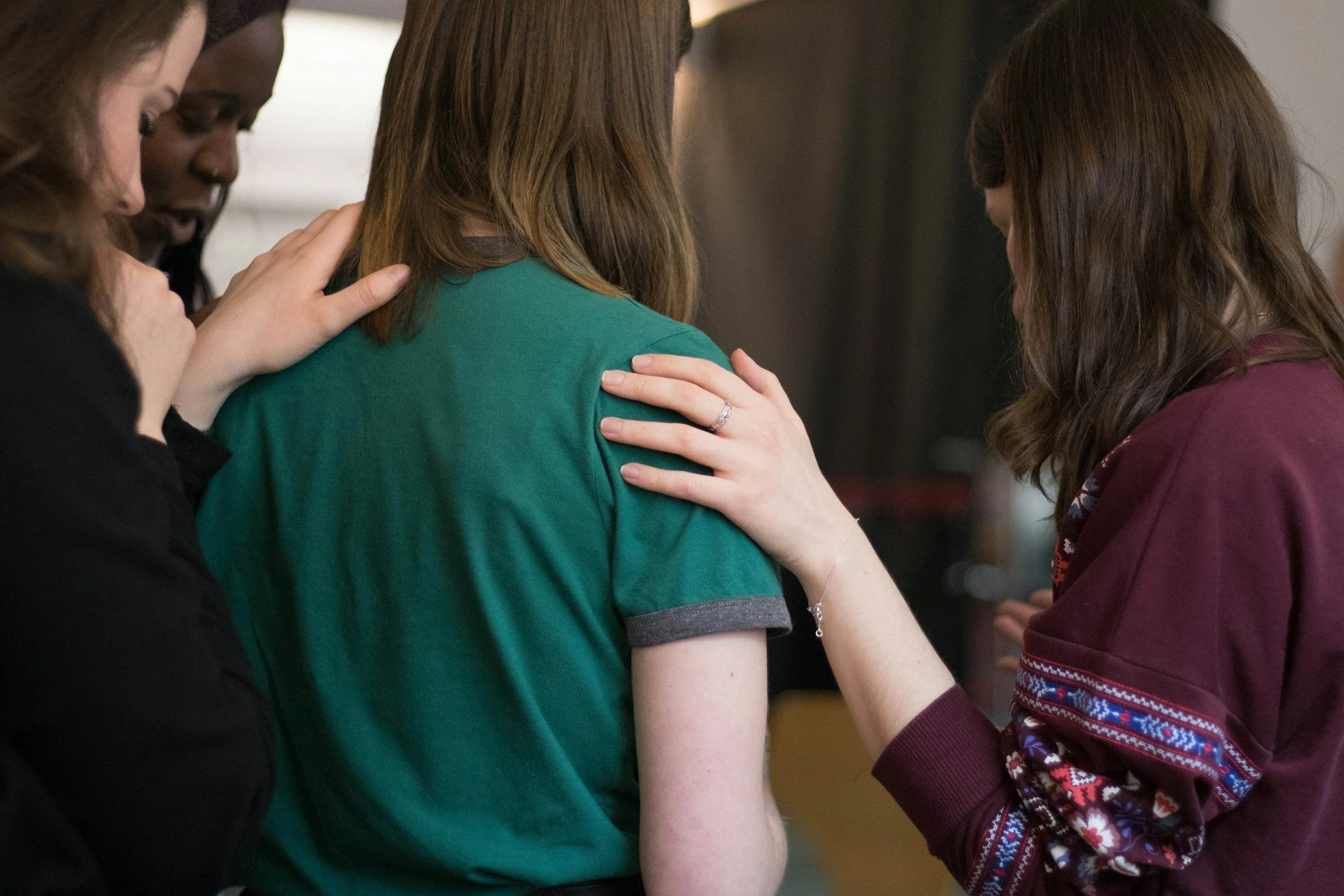
women coming together
If you're years out and still having moments, I want you to hear this clearly: you are not behind, you are not failing at survivorship, and you are not alone in this. The research is unambiguous — this fear is common, well-documented, and does not follow a tidy timeline toward disappearing.
The goal was never to reach a day with zero fear. It's to reach a life where that fear no longer gets the final word.
If you're ready for real tools to help you get there — not just understanding, but an actual plan — that's exactly what I built my free masterclass for. I'd love for you to join us.
Sources
Banerjee et al., "Fear of Cancer Recurrence in Lymphoma Survivors: A Descriptive Study," Journal of Psychosocial Oncology, 2020
"Fear of Cancer Recurrence: A Model Examination of Physical Symptoms, Emotional Distress, and Health Behavior Change," National Library of Medicine
Götze et al., "Fear of cancer recurrence across the survivorship trajectory: Results from a survey of adult long-term cancer survivors," Psycho-Oncology, 2019
Custers et al., "Not as Stable as We Think: A Descriptive Study of 12 Monthly Assessments of Fear of Cancer Recurrence Among Curatively-Treated Breast Cancer Survivors," Frontiers in Psychology, 2020
"Afraid and Tired: A Longitudinal Study of the Relationship Between Cancer-Related Fatigue and Fear of Cancer Recurrence in Long-Term Cancer Survivors," National Library of Medicine
"Fear of cancer recurrence and adverse cancer treatment outcomes," Journal of Cancer Survivorship, 2021
"Long-Term Fear of Recurrence in Young Breast Cancer Survivors and Partners," National Library of Medicine
