Beyond Diet & Exercise: Why Healing Stress & Trauma Matters for Breast Cancer Prevention

woman letting go of stresses
If you've spent any time researching how to lower your breast cancer risk or protect yourself from recurrence, you've read the same list a hundred times: eat more vegetables, move your body, sleep better, cut back on alcohol. That advice is real, and it works. I've built a lot of my own healing around it.
But here's what almost nobody says out loud: you can do everything "right" on that list and still feel like your body is working against you — if the stress and trauma underneath it never get addressed.
I know this firsthand. Fifteen-plus years ago, breast cancer turned my world upside down. And what I learned in the years since isn't just about kale and cardio. It's that healing happens in layers — and the emotional layer is not optional. It's biology.

So let's talk about what the research actually says about stress, trauma, and the body — and how to fold that healing into your lifestyle changes instead of treating it as a separate, "someday" project.
The Lifestyle Pillars Are Real — And They're Not the Whole Story

woman checking off list of healthy habits
Nutrition, movement, sleep, and reducing alcohol are foundational for good reason. They reduce inflammation, support hormone balance, help maintain a healthy weight, and strengthen the immune system — all factors linked to lower cancer risk and better outcomes for survivors.
If you haven't already, these are worth building first:
Whole-food, plant-forward eating to reduce inflammation and support detoxification
Regular movement — even walking — to regulate hormones and support immune function
7–9 hours of quality sleep, since sleep is when the body does its deepest repair work
Minimizing alcohol, a known risk factor for breast cancer at any amount

woman walking in nature
These pillars matter enormously. But for many women, especially those who've lived through trauma, illness, caregiving burnout, or chronic relational stress, willpower-based lifestyle change eventually hits a wall. You white-knuckle the meal plan for three weeks and then, under stress, you're back to old patterns. That's not a failure of discipline. It's your nervous system doing exactly what it was wired to do.
What the Science Actually Says About Stress, Trauma, and Cancer
This is the part that gets left out of most wellness content, and it deserves to be said plainly: chronic stress and unresolved trauma are not "just in your head." They show up in measurable, physical ways.
Stress hormones and the immune system are deeply connected. Chronic stress keeps the hypothalamic-pituitary-adrenal (HPA) axis — your body's central stress-response system — activated for too long. Over time, this can raise cortisol, contribute to low-grade systemic inflammation, and impair the immune system's ability to identify and clear abnormal cells. Researchers studying the biology of breast cancer specifically have found that this chronic stress response can even influence how tumors grow and spread, partly by reshaping the lymphatic pathways tumor cells use to travel.
Psychological stress has been studied specifically in relation to breast cancer recurrence. A 2021 systematic review looking at over 26,000 patients — the overwhelming majority of them breast cancer patients — examined the relationship between psychological stress and cancer recurrence. While researchers note the evidence is still developing and not every study agrees, several found meaningful associations between higher chronic stress and worse recurrence outcomes, reinforcing why psychological care is now considered a legitimate part of cancer prevention and survivorship, not a "nice extra."

woman with unresolved trauma
Unresolved trauma changes how the whole system functions. Emerging research in psycho-oncology has looked specifically at prolonged, unresolved psychological experiences — things like early-life adversity, chronic emotional invalidation, and unprocessed grief — and their relationship to immune surveillance and cellular repair. Trauma-related stress has also been shown to affect how consistently people follow through on treatment and healthy behaviors, which matters just as much as any single food or workout.
And the good news: this is reversible. A meta-analysis of psychosocial interventions in breast cancer patients found that structured programs addressing stress — not medication, just support and skills — measurably lowered cortisol levels. Separately, multiple randomized controlled trials on Mindfulness-Based Stress Reduction (MBSR) programs designed specifically for breast cancer survivors have shown improvements in sleep, fear of recurrence, cognitive function, and overall symptom burden. Your nervous system responds to healing work. That's not wishful thinking — it's been measured in clinical trials.
Why "Just Eat Better" Doesn't Stick When Trauma Is Unaddressed
Here's the piece I really want you to sit with: if your nervous system is stuck in a chronic stress response, your body is prioritizing survival, not long-term health. That's not a character flaw — it's neurobiology.
This is why so many women cycle through diets and workout plans that "should" work but don't stick. It's not that the lifestyle advice is wrong. It's that lifestyle change built on top of an unregulated nervous system is like trying to renovate a house while the foundation is still cracking. You need to tend to both at once.
This is also why I never want you to feel like recurrence, or the struggle to maintain healthy habits, is somehow your fault. Your biology has been doing its job. Now it's time to give it new information — safety, rest, and support — so it can do that job differently.
A Trauma-Informed Approach to Your Lifestyle Changes
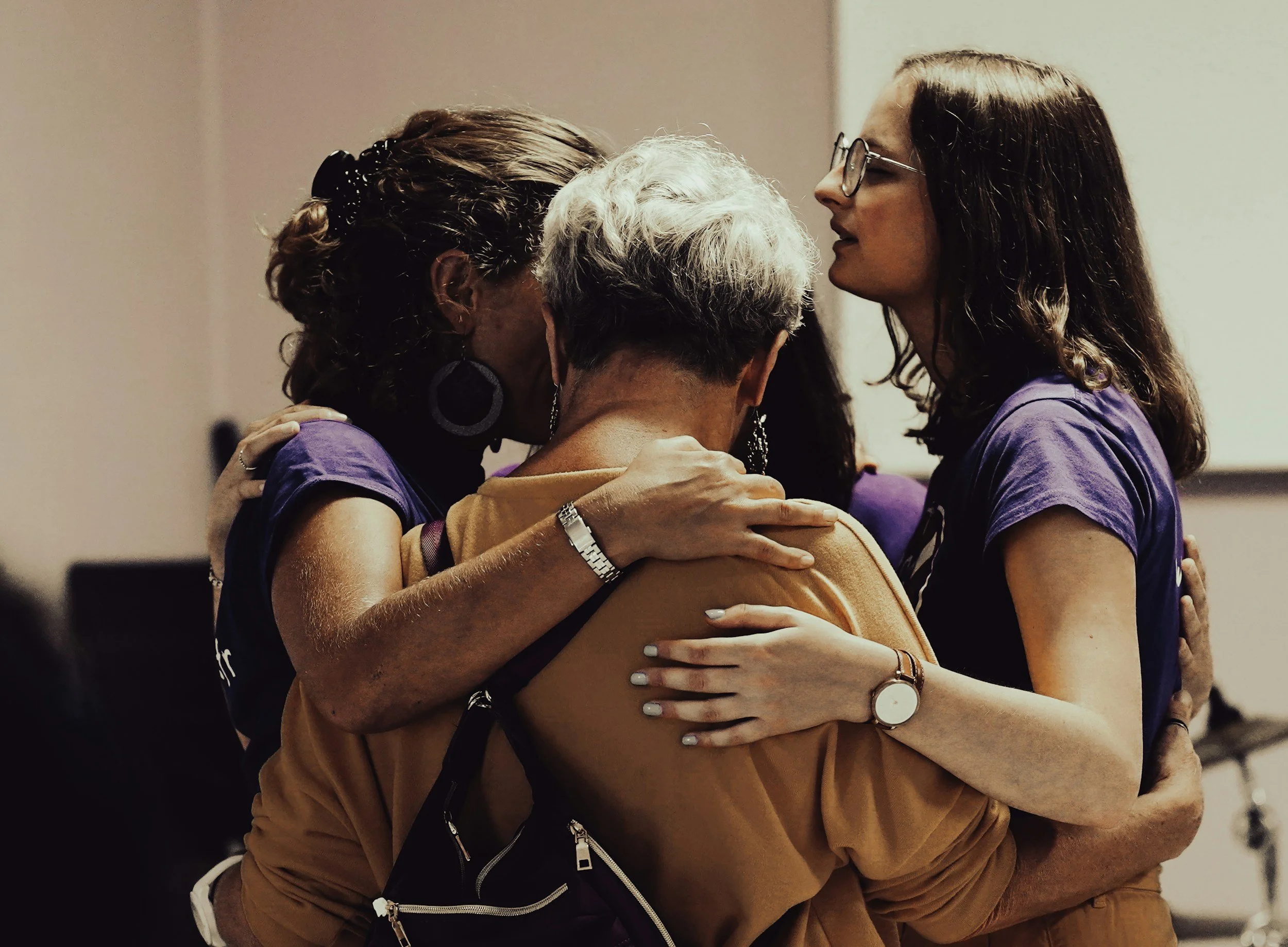
Getting support can help with cancer stresses
You don't need to overhaul your entire life or spend years in therapy before you're "allowed" to start healing. Small, consistent practices layered alongside your physical lifestyle changes make a real, measurable difference. Here's where to start:
1. Regulate before you restrict. Before adding another rule to your plate, add a nervous-system regulation practice: slow breathing, a short walk outside, or simply pausing for five minutes before reacting to stress. This calms the HPA axis first, which makes every other healthy choice easier to sustain.
2. Try a structured mind-body practice. Programs like MBSR were specifically studied in breast cancer survivors and have real evidence behind them for reducing fear of recurrence, improving sleep, and easing cognitive fog after treatment. You don't need a retreat — a 10-minute daily practice, done consistently, is where the research shows the benefit builds.
3. Name what happened. Trauma doesn't have to mean something dramatic — chronic stress, medical trauma, caregiving, grief, or unsupported hard seasons all count. Naming it, whether in a journal, with a therapist, or with a trusted friend, is often the first step that makes healing possible. This is exactly why I built my gratitude journal around gentle, consistent reflection rather than forcing positivity — processing what's real comes first.
4. Build a support system that actually supports you. Isolation amplifies stress biology; connection buffers it. This might mean a support group, a coach, a therapist trained in trauma or health psychology, or simply protecting time with people who make you feel safe.
5. Let your lifestyle changes be nervous-system-friendly, not another source of pressure. Perfectionism around food and exercise is its own stressor. Aim for consistent and kind, not flawless. A walk you actually enjoy will do more for your cortisol levels than a punishing workout you dread.

eating healthy can be fun
6. Get professional support if trauma feels big. If you're carrying trauma that feels too large to process alone — and for many women who've faced a cancer diagnosis, that's completely understandable — working with a therapist, ideally one experienced in medical trauma or somatic approaches, isn't a last resort. It's a legitimate, evidence-supported part of your prevention and recovery plan.
You're Not Starting From Zero
If you've read this and thought, "I've been doing all the 'right' things and still feel stuck," please hear this: you haven't failed. You were likely only given half the picture. The body keeps score of stress the same way it keeps score of nutrients and movement — and now you know that healing both is not just possible, it's backed by real science.
You don't have to choose between taking care of your body and taking care of your nervous system. They were never separate to begin with.
If you're ready to build a plan that honors both, grab my free cancer-fighting resources or join my weekly newsletter — every week I share strategies that blend the physical and emotional sides of prevention and recovery, because that's the only kind of healing that actually lasts.

This post is for educational purposes and is not a substitute for medical or mental health care. If you're navigating a cancer diagnosis, recurrence fears, or trauma, please work with your care team and a qualified therapist alongside any lifestyle changes.
Sources referenced:
Oh & Son, "The Risk of Psychological Stress on Cancer Recurrence: A Systematic Review," Cancers, 2021
"Chronic stress-induced immune dysregulation in breast cancer: Implications of psychosocial factors" (PMC)
"Psychosocial interventions reduce cortisol in breast cancer patients: systematic review and meta-analysis" (PMC)
Lengacher et al., multiple randomized controlled trials on MBSR(BC) for breast cancer survivors, Journal of Clinical Oncology and Psycho-Oncology
