
Gentle note: this post talks about sexual and relational trauma in general terms, with no graphic detail. Read at your own pace, and step away anytime.
Let's talk about the thing a lot of survivors carry quietly.
Maybe you love your partner and still flinch when they reach for you. Maybe desire just... left, and you're not sure it's coming back. Maybe you feel nothing at all during sex, or you feel too much, or you find yourself saying yes when part of you is screaming no. Maybe you're single and wondering if you'll ever want to be touched again.
If any of that sounds familiar, I want you to hear this first: you are not broken, and you are not alone. What you're feeling makes sense. It's your body and mind doing exactly what they learned to do to keep you safe.
And here's the honest part: healing intimacy after trauma usually isn't fast, and it isn't a straight line. But it is possible. Survivors rebuild desire, pleasure, and closeness all the time, on their own terms.
So grab a cup of something warm. Let's walk through why this happens, what's normal, and what actually helps.
Why trauma changes intimacy and libido

Here's the short version: trauma teaches your nervous system to watch for danger. And intimacy asks your nervous system to do the opposite, to soften, open up, and let someone close.
No wonder those two things clash.
Researchers who study this describe it as a problem of arousal getting crossed wires. Sexual arousal and threat arousal share a lot of the same body signals: a faster heartbeat, quicker breathing, heightened sensation. For a survivor, those signals can be read as "danger" instead of "pleasure," and the body shuts down or braces before your thinking brain even catches up (Yehuda, Lehrner & Rosenbaum, 2015). That same review makes a point I love: treating trauma has to include attention to sexual health, and the other way around.
A few other things often stack on top:
Body memory. A certain touch, smell, position, or tone of voice can bring the past rushing into the present, even years later and even with a loving partner.
Shame and old messages. Many survivors absorbed the idea that their body or their desire is "bad" or "dangerous." That belief can quietly mute wanting anything at all.
Medication. Some antidepressants, especially SSRIs, commonly lower libido or make arousal and orgasm harder (Cureus literature review, 2025). That's not a reason to stop your meds on your own. It is a reason to talk with your prescriber, because there are options.
Plain old exhaustion. Living on high alert is tiring. Desire needs some spare energy, and trauma recovery eats a lot of it.
https://catherinehaffey.com/journal/scanxiety-what-actually-helps
So if your libido feels like it disappeared, please know: it didn't fail you. It's protecting you, maybe a little too well.
What survivors often experience (and why it's normal)

There's no single "survivor sex life." But some patterns come up again and again. See if any of these feel familiar:
Desire that's low or gone. You're not interested, or you feel interested in theory but not in the moment.
Desire that feels high or urgent. Some survivors move toward sex to feel wanted, in control, or simply to feel something. That's a coping pattern too, not a character flaw.
Checking out. Your body is there but you're floating somewhere else, watching from a distance, or counting down until it's over. This is dissociation, and it's one of the most common ways a nervous system protects itself.
Feeling numb. Touch registers, but pleasure doesn't land.
Triggers out of nowhere. Everything's fine, then suddenly you're tense, tearful, angry, or frozen.
Pain. Tightness or pain with touch or penetration, which is often the body bracing.
Saying yes when you mean no (or "not right now"), because pleasing someone once felt safer than refusing.
Here's a number that might make you feel less alone. In a study of 137 women with PTSD after childhood sexual abuse, about 3 in 4 reported reduced sexual interest and about 6 in 10 reported reduced arousal (Weiss et al., 2023). Interestingly, only a small number met the criteria for a formal sexual disorder diagnosis. In other words, these struggles are incredibly common, and having them doesn't mean something is clinically "wrong" with you.
And this isn't only a women's experience. A systematic review of male survivors of childhood sexual abuse found studies reporting low desire, arousal difficulties, and pain, while also noting that men's experiences have been studied far less (Gewirtz-Meydan & Opuda, 2022). If you're a man reading this: you belong in this conversation too.
6 gentle ways to rebuild safety, desire, and pleasure
Think of these as invitations, not homework. Take what fits and leave the rest. The goal isn't to "get your libido back" on a deadline. It's to help your body learn that closeness can be safe again.

Start with safety, not sex. Before you think about desire, ask: where do I feel safe in my body? Maybe it's a warm shower, a weighted blanket, or your hand resting on your chest. Pleasure grows out of safety, so build that foundation first.
Get curious about your own body, alone and with no goal. Notice textures, temperatures, and what feels nice on your arms, hands, or face. No agenda. This is how you start to own your body again, on your own terms.
Practice staying present. When you notice yourself drifting away, gently come back: feel your feet on the floor, name five things you can see, take a slower breath out than in. Mindfulness-based approaches have real research behind them for sexual desire and arousal concerns. In one study of an online program, women with a history of sexual assault benefited just as much as women without one (Stephenson et al., 2023).
Know that desire can be responsive. Many people, especially women, don't feel desire out of the blue. It shows up after closeness begins, once they feel safe, relaxed, and connected. Researcher Rosemary Basson's work suggests intimacy, warmth, and communication are major drivers of desire for women (Check the Research: Female Sexual Desire). So if you never feel "spontaneous" desire, nothing is missing. You may just need the right conditions first.
Make a yes, no, and maybe list. Write down what feels good, what's off the table, and what you might be curious about someday. It's yours to change anytime. It also makes conversations with a partner so much easier.
Use a pause signal, and honor it every time. Choose a word or gesture that means "stop" or "slow down," no explanation needed. Every time it's respected, your nervous system learns something new: my no is safe here.
One honest note: if any practice brings up flashbacks or overwhelm, that's a sign to slow down and get support, not to push through. Healing doesn't come from white-knuckling it.
https://thrive.catherinehaffey.com/
Talking with a partner (without it feeling like a therapy session)

You don't owe anyone your full story. But letting a partner in on what helps can take a huge amount of pressure off both of you.
A few things that make it easier:
Pick a calm, non-sexual moment. A walk or a cozy evening, not right before or after sex.
Lead with what you want, not just what's hard. "I really want to feel close to you, and I need us to go slower" lands very differently than "something's wrong with me."
Agree that stopping is always okay. No sulking, no guilt, no questions asked. A partner who respects a pause builds more trust than any grand gesture.
Try touch with no destination. Some couples agree to a stretch of time where touch never leads to sex. Therapists sometimes call this sensate focus. Taking the "where is this going" pressure away lets your body relax into pleasure.
If you're not sure how to start, here are a few lines to borrow:
"I'm working through some old stuff, and it sometimes shows up when we're close. It's not about you. Can we figure out together what helps?"
"Sometimes I go somewhere else in my head. If you notice I've gone quiet or still, can you check in with me?"
"I'd love to just be close tonight, no sex. Is that okay?"
And a gentle reality check, because I care about you: a loving partner will meet you with patience. If someone pressures you, guilts you, or ignores your no, that's not you being "difficult." That's a red flag worth taking seriously.
When to get extra support
Self-help is powerful, and you also don't have to do this alone. Consider reaching out to a professional if:

Flashbacks, panic, or dissociation are showing up often, in or out of the bedroom
Pain with sex isn't easing
You think your medication might be affecting your libido
Intimacy is causing ongoing distress in your relationship
Helpful kinds of support include a trauma-informed therapist, a certified sex therapist, a pelvic floor physical therapist for pain, and your doctor or prescriber for medication questions.
Here's some genuinely hopeful news: healing trauma can help your sex life even when sex isn't the focus. In a study of 227 people with PTSD, an intensive trauma-focused treatment program led to improvements in sexual satisfaction and desire that were still there six months later, for both men and women (Van Woudenberg et al., 2023). The gains were modest, which is honest and real. Progress counts, even when it's gradual.
If you need someone to talk to right now (US):
National Sexual Assault Hotline (RAINN): call 800-656-4673, text HOPE to 64673, or chat at hotline.rainn.org, free and 24/7 (RAINN)
988 Suicide & Crisis Lifeline: call or text 988, or chat at chat.988lifeline.org (988 Lifeline)
Outside the US, please contact your local emergency number or crisis line.
This post is for education and encouragement. It isn't medical, psychological, or legal advice, and it isn't a substitute for care from a qualified professional who knows your story.
You get to go at your own pace
If you take one thing from this post, let it be this: your body isn't the enemy. It learned to protect you, and it can learn safety and pleasure too.
There's no timeline you're behind on. Some days you'll feel close and open, and some days you won't, and both are part of healing. Every small moment of choosing what feels right for you is a win.
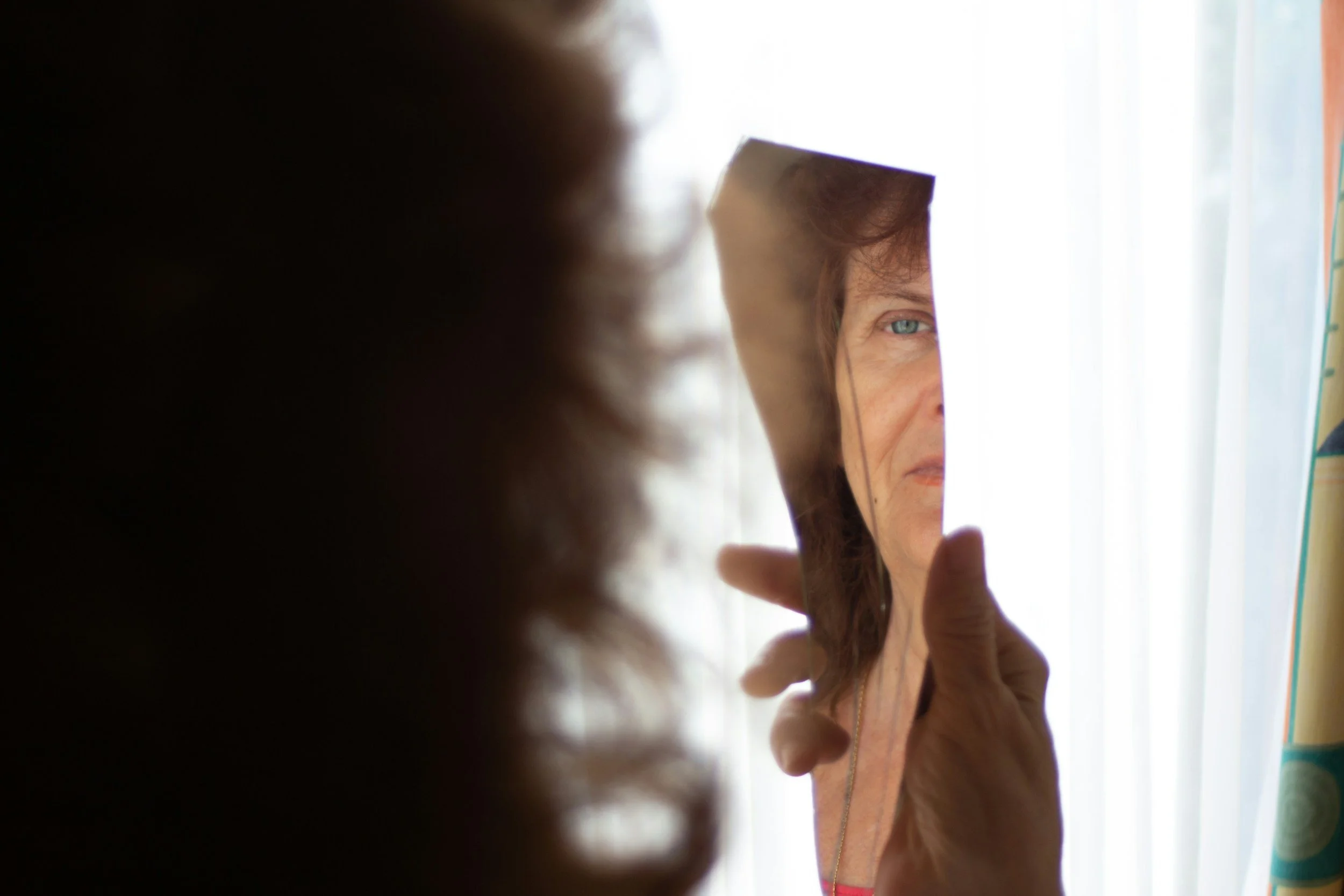
If you want a space to keep doing this work with people who get it, come join us inside Beyond, my membership community on Skool. It's where we go deeper on topics like this, with gentle guidance and zero judgment.
skool.com/the-beyond-membership-7108
You deserve closeness that feels safe, wanted, and yours. I'm cheering you on.
Frequently asked questions
Is it normal to lose your sex drive after trauma?
Yes, very. In one study of women with PTSD after childhood sexual abuse, about 3 in 4 reported reduced sexual interest. Low libido after trauma is a common, understandable response from a nervous system that learned to stay on guard. It isn't a sign that you're broken.
Why do I dissociate or "check out" during sex?
Dissociation is a protective response. When closeness or certain sensations feel too much like past danger, your mind creates distance so you don't have to feel it fully. Grounding skills, slowing down, and trauma-informed therapy can help you stay more present over time.
Can trauma make my sex drive higher instead of lower?
Yes. Some survivors find themselves seeking sex to feel wanted, in control, or to feel anything at all. That's a coping pattern, not a flaw. If it leaves you feeling empty or unsafe, it's worth exploring with a therapist.
Will my libido ever come back?
For many survivors, desire does return or grows in new ways, especially as safety and trust build. Research shows trauma-focused treatment can improve sexual desire and satisfaction. Progress is often gradual, and that's okay.
Can my antidepressant be lowering my libido?
It can. Lower desire and difficulty with arousal or orgasm are common side effects of SSRIs. Don't stop your medication on your own; talk with your prescriber about options like adjusting the dose or switching medications.
How do I tell my partner about my trauma and intimacy needs?
Choose a calm, non-sexual moment, share only what you're comfortable with, and focus on what helps you feel safe. You might say, "I want to feel close to you, and I need us to go slower." Agree together that stopping is always okay.
What kind of therapist helps with intimacy after trauma?
Look for a trauma-informed therapist, a certified sex therapist, or someone trained in both. For pain during sex, a pelvic floor physical therapist can help. Your doctor can also review medications or health factors that affect libido.
References
Gewirtz-Meydan, A., & Opuda, E. (2022). The impact of child sexual abuse on men's sexual function: A systematic review. Trauma, Violence, & Abuse, 23(1), 265–277. https://doi.org/10.1177/1524838020939134
Management of antidepressant-induced sexual dysfunction: A literature review. (2025). Cureus. https://doi.org/10.7759/cureus.90170
National Sexual Assault Hotline. RAINN. https://www.rainn.org/resources
SIECCAN / SexandU.ca. (2012). Check the research: Female sexual desire. PDF
Stephenson, K. R., Eshleman Latimer, S. R., Zippan, N. L., & Brotto, L. A. (2023). History of sexual assault as a predictor of response to a self-guided online program for sexual desire and arousal difficulties in women. Archives of Sexual Behavior, 52, 3379–3391. https://doi.org/10.1007/s10508-023-02685-5
Substance Abuse and Mental Health Services Administration. 988 Suicide & Crisis Lifeline. https://988lifeline.org/
Van Woudenberg, C., Voorendonk, E. M., Tunissen, N., Van Beek, A., Rozendael, L., Van Minnen, A., & De Jongh, A. (2023). The impact of intensive trauma-focused treatment on sexual functioning in individuals with PTSD. Frontiers in Psychology, 14, 1191916. https://doi.org/10.3389/fpsyg.2023.1191916
Weiss, J., Steil, R., Priebe, K., Lindauer, P., Kleindienst, N., Fydrich, T., & Müller-Engelmann, M. (2023). Sexual dysfunctions in women with posttraumatic stress disorder following childhood sexual abuse: Prevalence rates according to DSM-5 and clinical correlates. Archives of Sexual Behavior, 52(8), 3365–3378. https://doi.org/10.1007/s10508-023-02652-0
Yehuda, R., Lehrner, A., & Rosenbaum, T. Y. (2015). PTSD and sexual dysfunction in men and women. The Journal of Sexual Medicine, 12(5), 1107–1119. https://doi.org/10.1111/jsm.12856
