
woman in survivorship
The quiet, disorienting part of the cancer journey no one warns you about
There's a moment almost every survivor recognizes, even if we don't talk about it much: the day treatment ends.
On paper, it's the finish line. Friends and family celebrate. The calendar clears out. You're supposed to feel free.
And then — for so many of us — something unexpected happens instead. The relief lasts about as long as it takes to walk out of the building. Underneath it, something closer to fear starts to surface.
If you've felt this, I want you to hear something clearly: this is not a flaw in your resilience. It's not "failing to feel grateful enough." It's one of the most consistently documented experiences in cancer survivorship research, and it has a name, a shape, and a reason.
The Safety Net Disappears
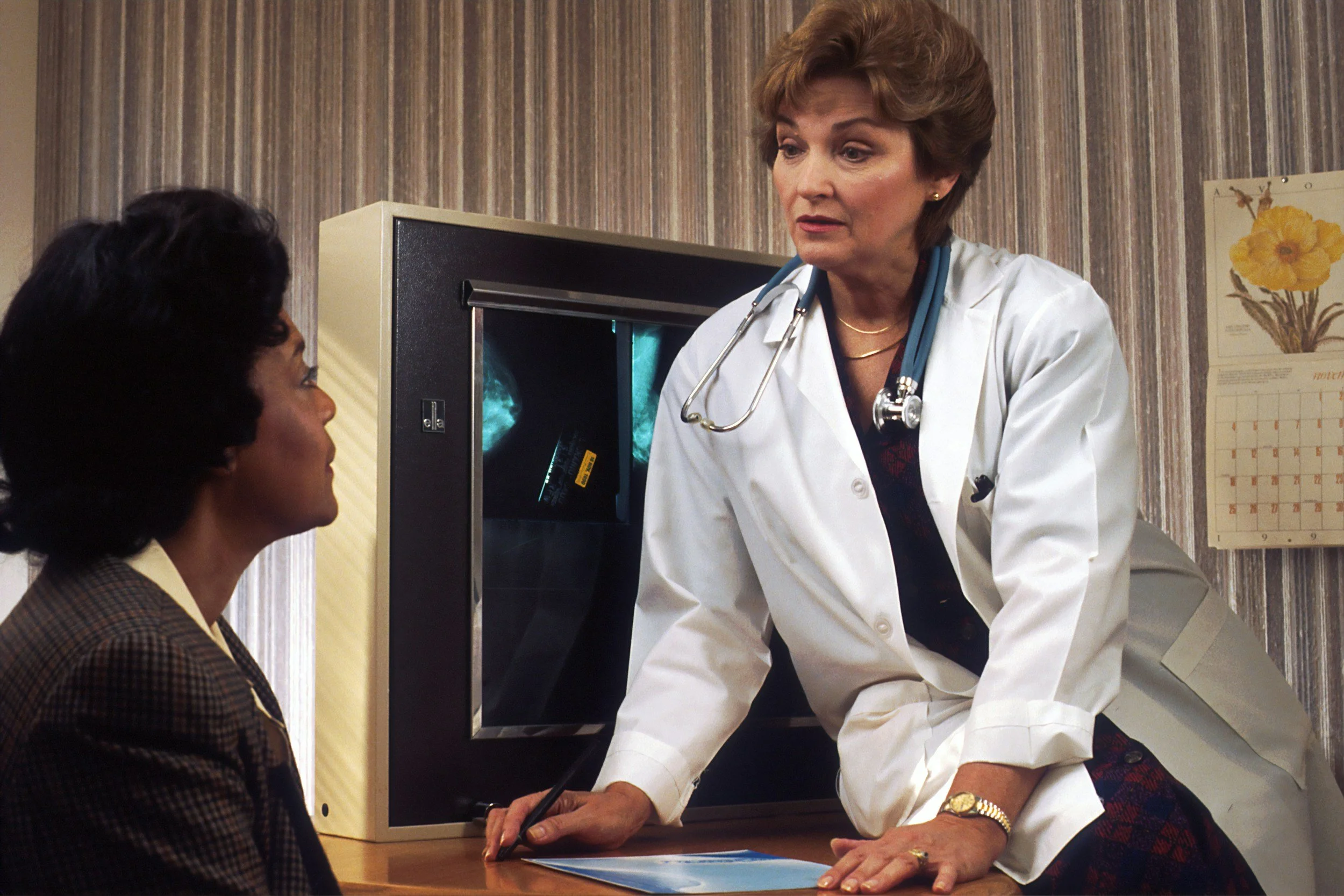
During active treatment, your days have structure. Appointments, scans, labs, a care team checking in on you constantly. It's exhausting, but it's also, in a strange way, containing. Someone else is watching for the thing you're most afraid of, so a part of you doesn't have to.
Researchers who study this transition describe it using exactly that phrase — the loss of the "safety net" of regular treatment, paired with ongoing uncertainty about your cancer status. It's considered one of the central reasons the post-treatment period feels so disorienting, even for women who were coping well throughout treatment itself.
Here's what's interesting, though: research doesn't show that every survivor's overall anxiety or depression spikes the moment treatment ends. For many women, general distress levels actually stay steady, or even improve, in the months afterward. What does stay elevated — and often goes unspoken — are the cancer-specific worries: fear of recurrence, lingering physical effects, and the strange, unglamorous work of "resuming normal life." A meaningful number of survivors remain at risk for sustained distress around these exact concerns, even when they look and sound completely fine on the outside.
In other words: you're not imagining it, and you're not "supposed to be over it" just because the general checklist of depression and anxiety symptoms doesn't apply to you. The specific fears are real, common, and worth naming.
Why the Timing Catches So Many Survivors Off Guard
Two things happen at once when treatment ends, and both are disorienting.
First, the physical effects don't end when treatment does. Fatigue, hormonal shifts, changes in energy, and lingering side effects are common, and many women are caught off guard because they hadn't expected these problems to continue.

Second — and this is the part that surprises people most — once the intense focus on medical treatment lifts, there's suddenly room for a different kind of struggle: a psychological one. You weren't avoiding those feelings on purpose during treatment. You simply didn't have the bandwidth to feel them and survive treatment at the same time. Now you do. That's not weakness — that's your nervous system finally getting a moment to catch up.
Fear of Recurrence Isn't "Just Anxiety"
Fear of recurrence deserves its own conversation, because it's more common — and more clinically recognized — than most survivors realize. Research estimates that fear of recurrence affects somewhere between 60% and 99% of breast cancer survivors, and it's consistently ranked among the top concerns survivors want to discuss with their care team.
That range matters, because so many survivors quietly assume they're the only one still checking their body for changes, still bracing before scans, still feeling their heart rate spike at an unrelated doctor's appointment. You're not overreacting. You're not "stuck in cancer." When severe, fear of recurrence can genuinely affect quality of life and coping — which is exactly why it's now treated as a legitimate, addressable part of survivorship care, not something you're expected to white-knuckle through alone.

This Isn't a Short Window — And That's Important to Know
Here's something I wish more people understood going into survivorship: this adjustment period doesn't always resolve in a few weeks. For a meaningful number of survivors, cancer-specific distress can persist well beyond the first months after treatment ends — which is part of why major oncology guidelines now call for anxiety and depression screening at periodic points across the entire cancer trajectory, not just during active treatment.
If you're a year or two out and still having hard days, that doesn't mean you're doing survivorship "wrong." It means you're having a documented, expected response to an experience that asked a lot of your body and your nervous system — one that doesn't switch off on a timeline that's convenient for everyone else.
You're Not Behind. You're Not Broken. You're in a Real Phase.
If no one told you that survivorship could feel like this, I'm telling you now: it's real, it's documented, and it's not a sign that something is wrong with you. The finish line you crossed was real — and so is what comes after it.

In Part II, we'll walk through what actually helps during this phase — practical, nervous-system-based tools, not platitudes. For now, if you're in the middle of this, you don't have to carry it quietly. And you don't have to carry it alone.
If this resonates, my gratitude journal is a gentle place to start noticing the good alongside the hard. And if you'd like support navigating this phase explore my free resources or join the newsletter for more on this series as it unfolds.
Frequently Asked Questions: What to Ask Your Oncologist
Is it normal to feel more anxious now than I did during active treatment?
Yes — this is one of the most well-documented patterns in survivorship. It's worth naming for your care team directly rather than assuming it will pass on its own. Ask them how they screen for this and what support is available if it doesn't ease up.
What does my survivorship care plan actually include?
Ask specifically for a written survivorship care plan that outlines your surveillance schedule, expected late or long-term effects, and who to contact for which concerns. Not every practice provides this automatically — it's worth requesting.
How often will I be screened for anxiety or depression going forward?
Current oncology guidelines recommend periodic screening for anxiety and depression across the entire survivorship trajectory, not just during treatment. Ask how — and how often — this happens in your follow-up visits.
What physical symptoms are expected after-effects, and what should prompt a call?
Fatigue, joint pain, hormonal shifts, and sleep changes are common well after treatment ends. Ask your oncologist to help you distinguish "expected and monitorable" from "call us now" so you're not left guessing during every new sensation.
Is there a resource or specialist for fear of recurrence specifically?
Fear of recurrence is now recognized as its own area of clinical support, with dedicated interventions and specialists. Ask whether your cancer center offers this, or whether they can refer you to someone who does.
Who do I contact between appointments if I'm struggling?
Many practices have a nurse navigator, social worker, or survivorship coordinator for exactly this. Get a name and a direct line before you need it — not in the middle of a hard week.
References
Andersen BL, DeRubeis RJ, Berman BS, et al. Screening, assessment, and care of anxiety and depressive symptoms in adults with cancer: an American Society of Clinical Oncology guideline adaptation. J Clin Oncol. 2014;32(15):1605-1619.
Costanzo ES, Lutgendorf SK, Mattes ML, Trehan S, Robinson CB, Tewfik F, Roman SL. Adjusting to life after treatment: distress and quality of life following treatment for breast cancer. Br J Cancer. 2007;97(12):1625-1631.
Cruickshank S, Steel E, Fenlon D, Armes J, Scanlon K, Banks E, Humphris G. A feasibility study of the Mini-AFTER telephone intervention for the management of fear of recurrence in breast cancer survivors: a mixed-methods study protocol. Pilot Feasibility Stud. 2017;4:22.
Park JH, Jung YS, Kim JY, Bae SH. Determinants of quality of life in women immediately following the completion of primary treatment of breast cancer: A cross-sectional study. PLoS ONE. 2021;16(10):e0258447.
